
LiFePO4 is Lithium-Ion: Why Terminology Matters
Li-Ion Chemistries:
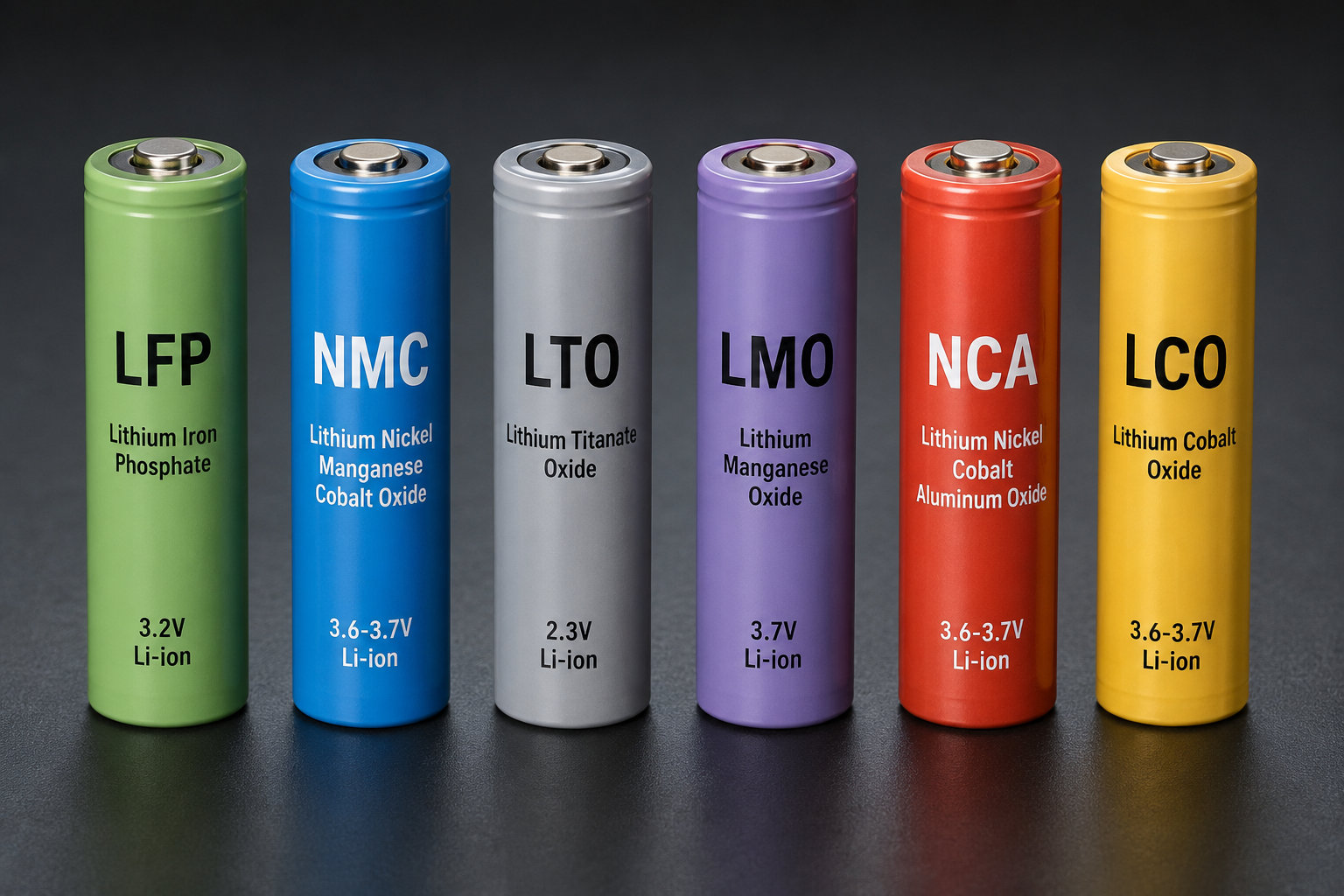

I assure you, both these guys meant well but, their education surrounding “li-ion batteries” is just lacking. It’s well-meaning but, factually incorrect, and that serves to further the confusion.
One of the most common misconceptions I encounter in boating forums, Facebook groups, and dockside conversations is the belief that LiFePO4 batteries are somehow “not lithium-ion.” Unfortunately, this misunderstanding leads to confusion about safety, charging requirements, and battery technology in general.
Let’s be clear:
LiFePO4 = Lithium-Ion
In fact, when someone says “lithium battery,” that statement alone tells you nothing useful because a “lithium battery” is non-rechargeable. There are numerous different lithium-ion (rechargeable) based chemistries. Even saying “lithium-ion battery” is a bit like saying “lead-acid battery.” Is it; Flooded Deep-Cycle, AGM, Gel, Carbon enhanced, or Carbon Foam? The chemistry details matter. When discussing Li-ion the specific chemistry should be included.
Why the Terminology Matters:
In 2019 I had an email from a customer of ours asking whether he should check “No” or “Yes”. to a question regarding li-ion batteries on his insurance form? He explained that he checked “No” because he had LiFePO4 “which is not “Li-Ion“. I had to explain him that as far as insurance or ABYC is concerned, LFP is a li-ion chemistry. If he had checked “No”, then had a fire, not even related to the batteries, the insurer would have grounds to deny coverage.
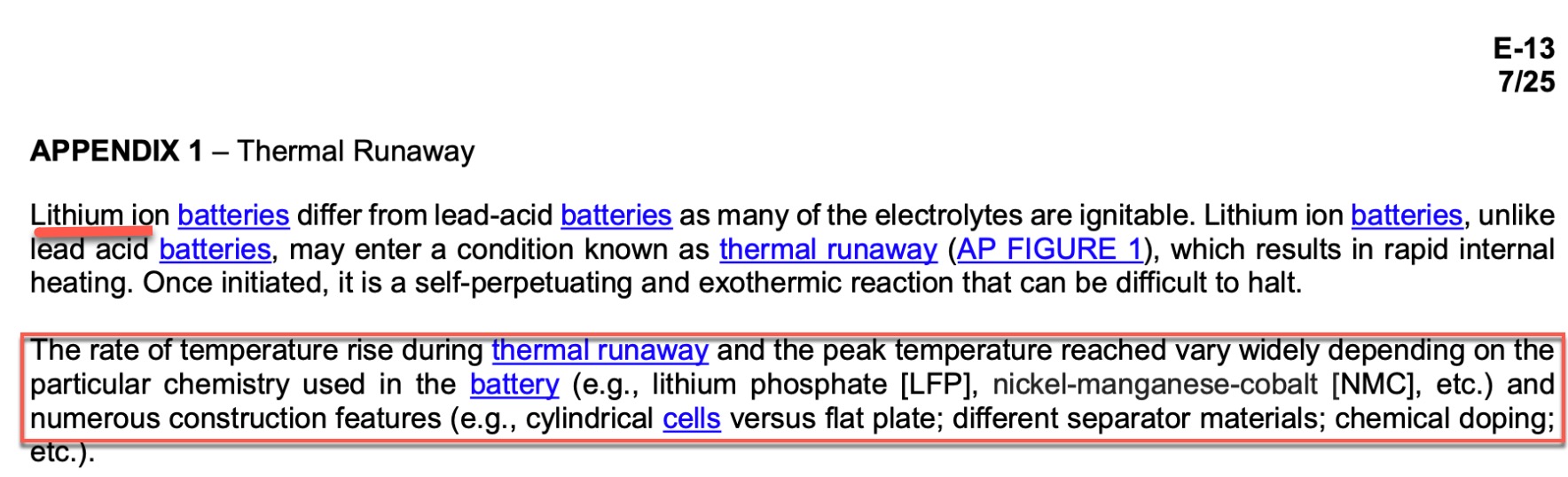
As can be seen here ABYC E-13 includes LFP in the li-ion family despite its low risk of thermal runaway. LFP is really the only li-ion chemistry that should be used on recreational boats, that is pretty obvious.
Lithium vs. Lithium-Ion
The confusion often starts because there are two very different categories of “lithium” batteries:
Lithium Batteries = Non-Rechargeable
These are the batteries most people have used for decades:
- CR2032 etc. coin cells
- Lithium AA batteries
- Lithium AAA batteries
- Camera batteries
- Watch batteries
These batteries use lithium metal and are not rechargeable. Once they’re discharged, they’re done.
Lithium-Ion Batteries = Rechargeable
Lithium-ion batteries are rechargeable and move lithium ions between electrodes during charging and discharging. This the definition of Li-Ion Battery.
Examples of Li-Ion chemistries:
- LiFePO4 (Lithium Iron Phosphate)
- NMC (Nickel Manganese Cobalt)
- NCA (Nickel Cobalt Aluminum)
- LCO (Lithium Cobalt Oxide)
- LMO (Lithium Manganese Oxide)
- LTO (Lithium Titanate)
If you can recharge it hundreds or thousands of times you’re dealing with some form of lithium-ion chemistry.
Your smartphone uses lithium-ion.
Your laptop uses lithium-ion.
Most EVs use lithium-ion.
And your marine LiFePO4 house bank? Yep, that’s lithium-ion too, just one of the safest li-ion chemistries.
Not All Lithium-Ion Chemistries Are Equal
Just as not all lead-acid batteries behave the same way, not all lithium-ion chemistries behave the same way.
-Some prioritize energy density.
-Some prioritize cycle life.
-Some prioritize charging speed.
-Some prioritize safety.
For marine applications, safety tends to rank very high on the priority list, as it should.
Lithium-Ion Chemistries Ranked from Safest to Most Volatile
While there is no perfect ranking because cell design and manufacturing quality matter, the following list generally reflects industry understanding of thermal stability and resistance to thermal-runaway.
1. Lithium Titanate (LTO)


Safest Li-Ion Chemistry
- Extremely stable chemistry
- Outstanding cycle life
- Very fast charging
- Operates in cold temperatures
- Very low energy density
- Very expensive
LTO is considered the gold standard for Li-Ion safety but is rarely used in recreational marine applications due to cost, size and cell voltage.
2. Lithium Iron Phosphate (LiFePO4 or LFP)

- Excellent thermal stability
- Very resistant to thermal runaway
- Long cycle-life
- Excellent choice for marine, RV & Off-Grid use
- Lower energy density than EV-focused chemistries
This is why LiFePO4 has become the dominant chemistry for marine house banks.
3. Lithium Manganese Oxide (LMO)

- Decent thermal stability
- Moderate energy density
- Better safety profile than cobalt-rich chemistries
4. Nickel Manganese Cobalt (NMC)

- Common in EVs
- Good balance of energy density and performance
- Less thermally stable than LiFePO4
5. Nickel Cobalt Aluminum (NCA)

- Very high energy density
- Used in some electric vehicles (Tesla)
- More demanding thermal management requirements
6. Lithium Cobalt Oxide (LCO)
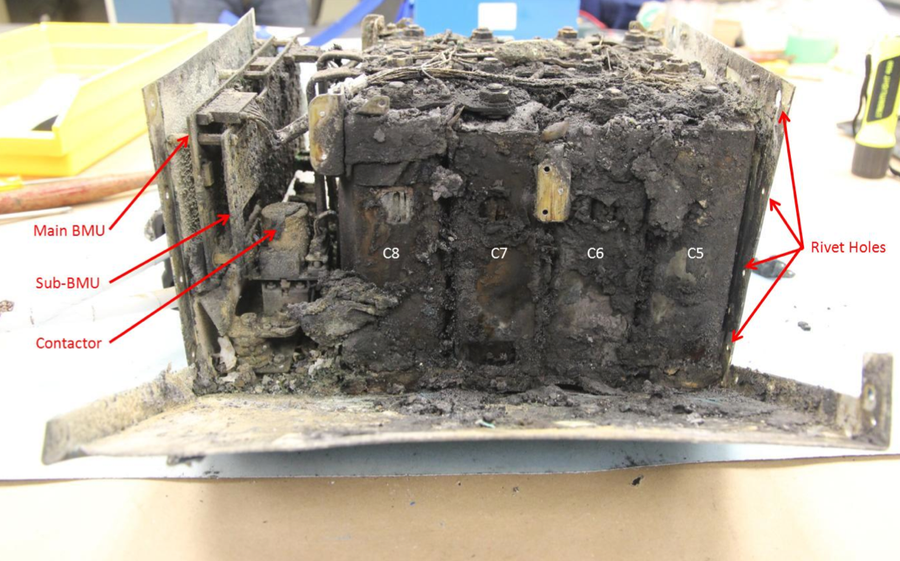
Most Volatile (Boeing Incident) (see-pic above)
- Extremely high energy density
- Common in older consumer electronics
- Lowest thermal stability
- Most susceptible to thermal runaway if abused
Again, cell design, battery management systems, manufacturing quality, and installation practices all matter. A poorly designed LiFePO4 battery can still fail, while a well-engineered NMC battery can operate safely for years.
Why This Matters
When someone says:
“I don’t trust lithium-ion batteries, but I use LiFePO4.”
They’re actually talking about the same battery family. Only a statement like this is like nails on a chalk board to anyone that actually understands li-ion batteries.
LiFePO4 is not some magical non-lithium technology. It’s a lithium-ion chemistry that happens to be one of the safest and most thermally stable lithium-ion chemistries available.
The real discussion shouldn’t be “LFP vs. lithium-ion.”
The discussion should be:
Which lithium-ion chemistry are we talking about?
Because lumping a LiFePO4 house bank into the same category as a cobalt-rich laptop battery is like comparing a golf cart battery to the Boeing battery.
The chemistry matters.
For marine applications, LiFePO4’s combination of safety, cycle life, charging acceptance, and cost is precisely why it has become the preferred lithium-ion chemistry afloat.
PLEASE HELP!
This site is 100% reader supported. My wife is urging me to shut it down as it just keeps costing us money. My stroke-recovery, PT & OT is very costly & not covered by insurance as is authoring this site and keeping it secure. Click BUY ME A COFFEE if you want to support this site.
