
Why all the secrecy Around Short Circuit Current?
This article has been on my to-do list since 2016. I had started it but, never finished. In 2016 IR meters started at $500.00 and went up from there. Today, the very affordable Fnirsi HRM-10 or the Yaorea 1035+ represent an amazing value! I paid North of $400.00 in 2016 for my Yaorea 1035+ IR meter direct from China. Today, both of these meters are sub $80.00
One of the most overlooked specifications in the marine lithium battery market is short circuit current (SCC).
Everyone wants to talk about Bluetooth apps, low-temperature charging, heated batts, Victron integration, and whether the battery case is made from a recycled unicorn horns. (grin) Yet almost nobody asks the far more important question:
“How much fault current can this battery actually deliver?”
If you are selecting fuses, determining AIC ratings, designing battery switches, or attempting to comply with ABYC standards, SCC is not an optional number. It is one of the most important safety parameters of the entire battery system.
Unfortunately, many lithium battery manufacturers either don’t know the SCC of their batteries or calculate it incorrectly.
Who is This Article For?
This article is primarily for the DIY battery builder. However, for the curious drop-in owner this will show you how it is done.
This is the 101 article that should also be read:
Battery Banks & Overcurrent Protection
Terminology used:
IR = Internal Resistance: All cells have an IR and there are meters to test the actual IR.
SCC = Short Circuit Current; The fault current the bare cells/cell module, can deliver into a dead short.
AIC = Amperage Interrupt Current; The max current the fuse or breaker can safely interrupt , without failing in an unsafe manner.
OCPD = Overcurrent Potection Device; A fuse or breaker designed to open the circuit under excessive over-current.
A BMS Is Not The Answer to SCC!
One of the biggest mistakes/misleading info I see is manufacturers claiming:
“Our battery can only deliver 200A because the BMS is rated for 200A.”
This is false, as far as standards go.
Safety Standards – A BMS is Not Considered OCPD
ABYC and UL do not consider a Battery Management System to be an overcurrent protection device. The BMS is a battery management device. It protects cells from abuse, that’s it. A BMS is absolutely not a substitute for a properly rated fuse even if it claims short-circuit protection. In this scenario, the BMS is merely protecting itself, so it can continue doing its job. A BMS with SCC is a very good feature but not one that will net you coverage in an electrical system related fire if your fuse is not standards compliant!
How to Calculate SCC?
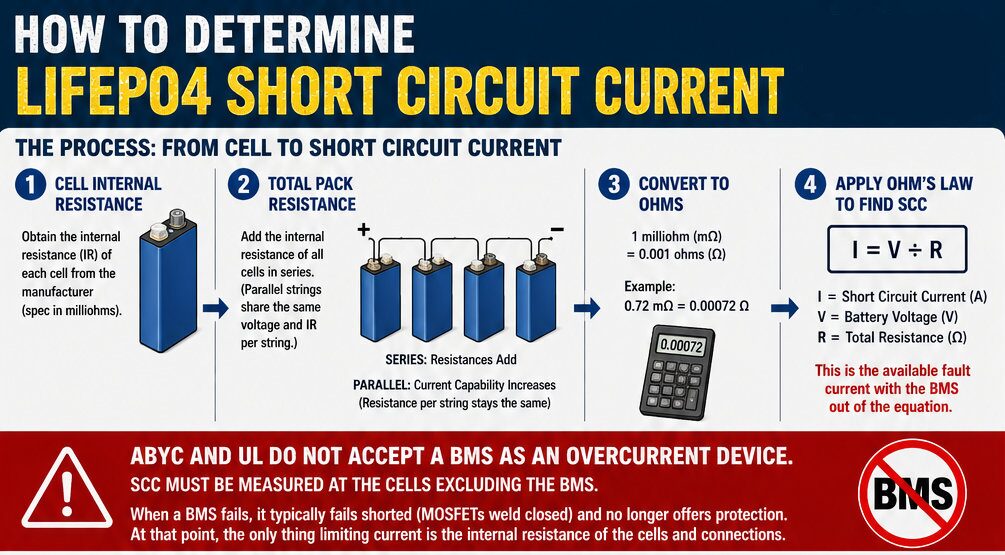
I know this may seem confusing, but inside a battery that uses parallel cells, which are then placed in series, eg: 2P4S for a 12.8V nominal battery the cells in parallel will be roughly half the IR of the single cell.
Single 20 Ah Cell
Two in Parallel

Why is this important?
Because there are many batteries out there that internally use parallel cells even if it is a 4S battery.. This is why it is always best to measure the B+/B- of the physical cell module.
When Determining SCC – The BMS is Not Part of The Equation!
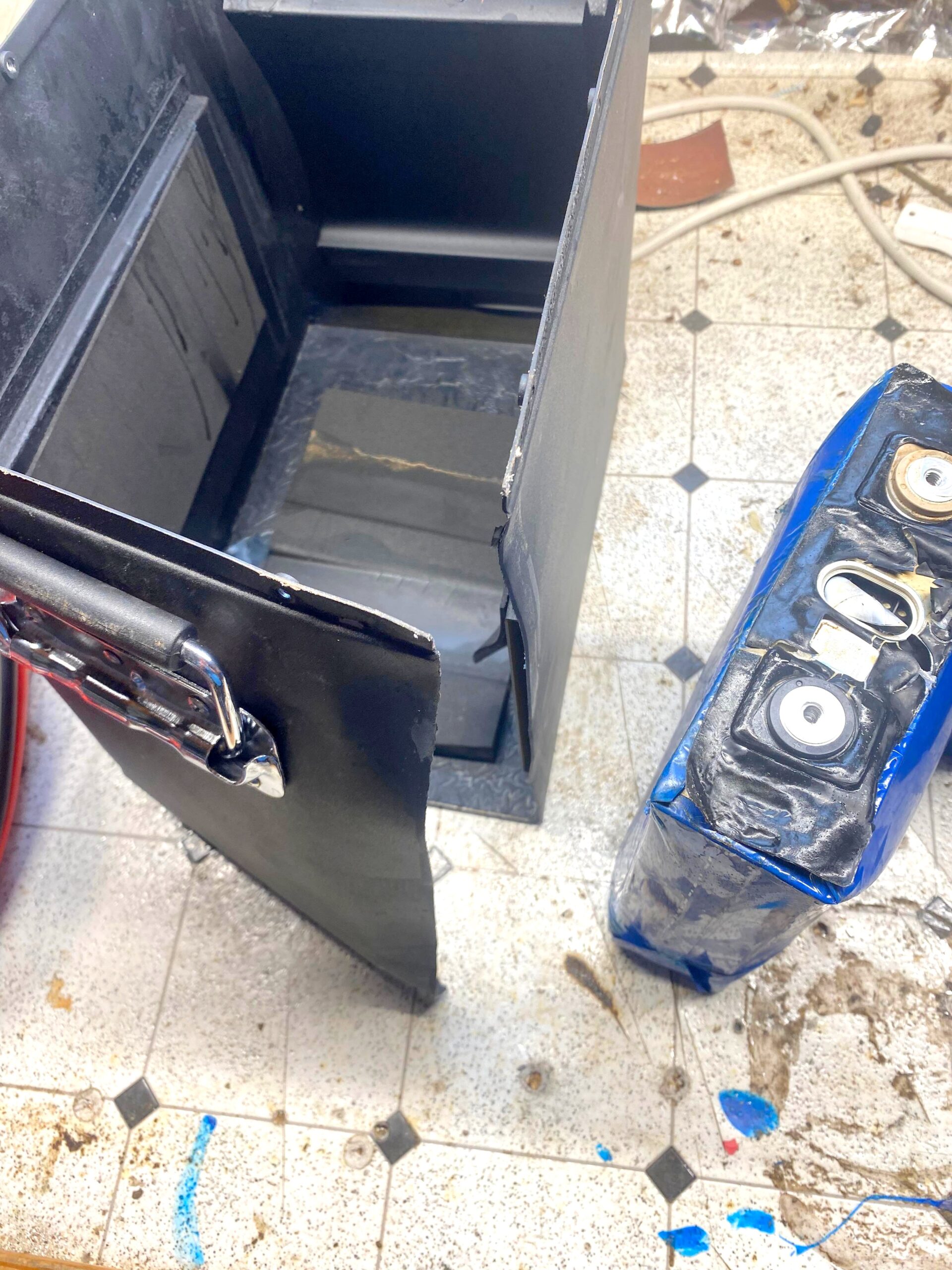
Why? Electronic devices can fail, UL & ABYC both know this, hence the AIC requirement. When a MOSFET BMS fails under severe fault-conditions, they typically fail shorted, not open. Once the FET’s weld themselves into a conductive lump of silicon and aluminum, your bare cells are now directly connected to the fault. this is why the standards organizations will not accept a BMS as OCPD. At that point the only thing limiting current is the internal resistance of the cells, bus bars, and interconnections.
MOSFET FAILURE:
This was caused by a simple design mistake: A failed MPPT sent over 100V to the 12V BMS.
Bare Cells/Cell module is the only SCC number that matters.
-Not the BMS current rating.
-Not the marketing brochure.
-Not the Bluetooth app.
The SCC of the bare cells is all that matters. Sadly most cell makers fail to publish SCC.
Calculating Short Circuit Current
Fortunately, calculating theoretical SCC is quite simple & Ohm’s Law still works, even when the marketing department doesn’t.
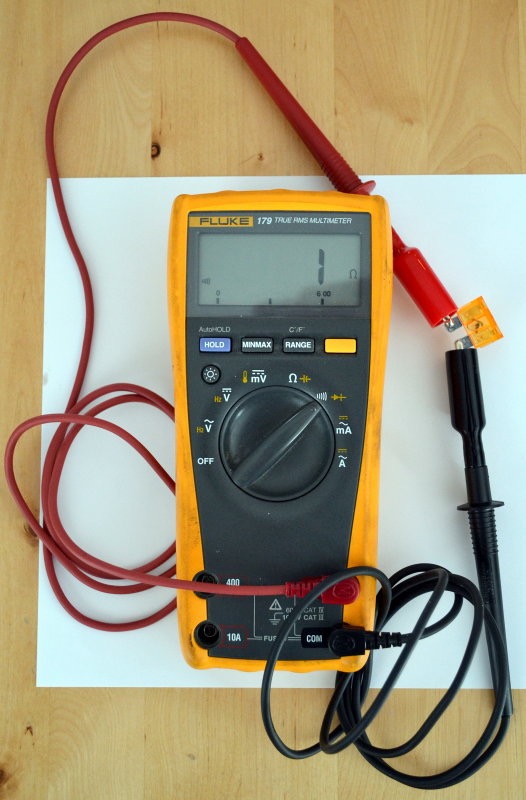
The Tools:
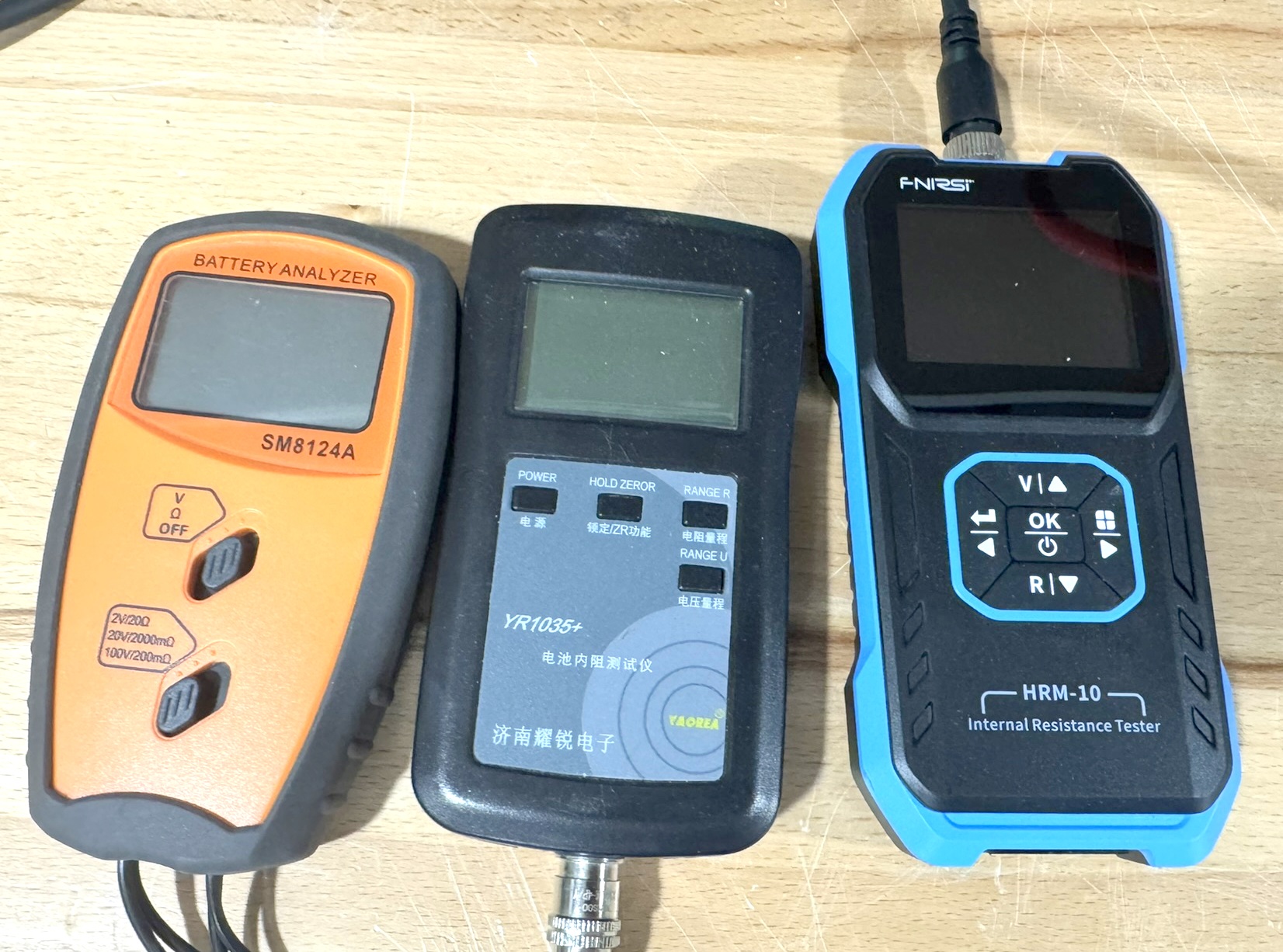
From Left: SM8124A (not a tool I recommend), Yaorea YR 1035+, Fnirsi HRM-10
Fortunately these meters are now pretty affordable. You can purchase these tools in our Amazon store which helps to fund this site. Either the Fnirsi HRM-10 or Yorea 1035+ are my budget pics:
The equation is Simple:
I = V ÷ R
Lets use this 100Ah Battery:
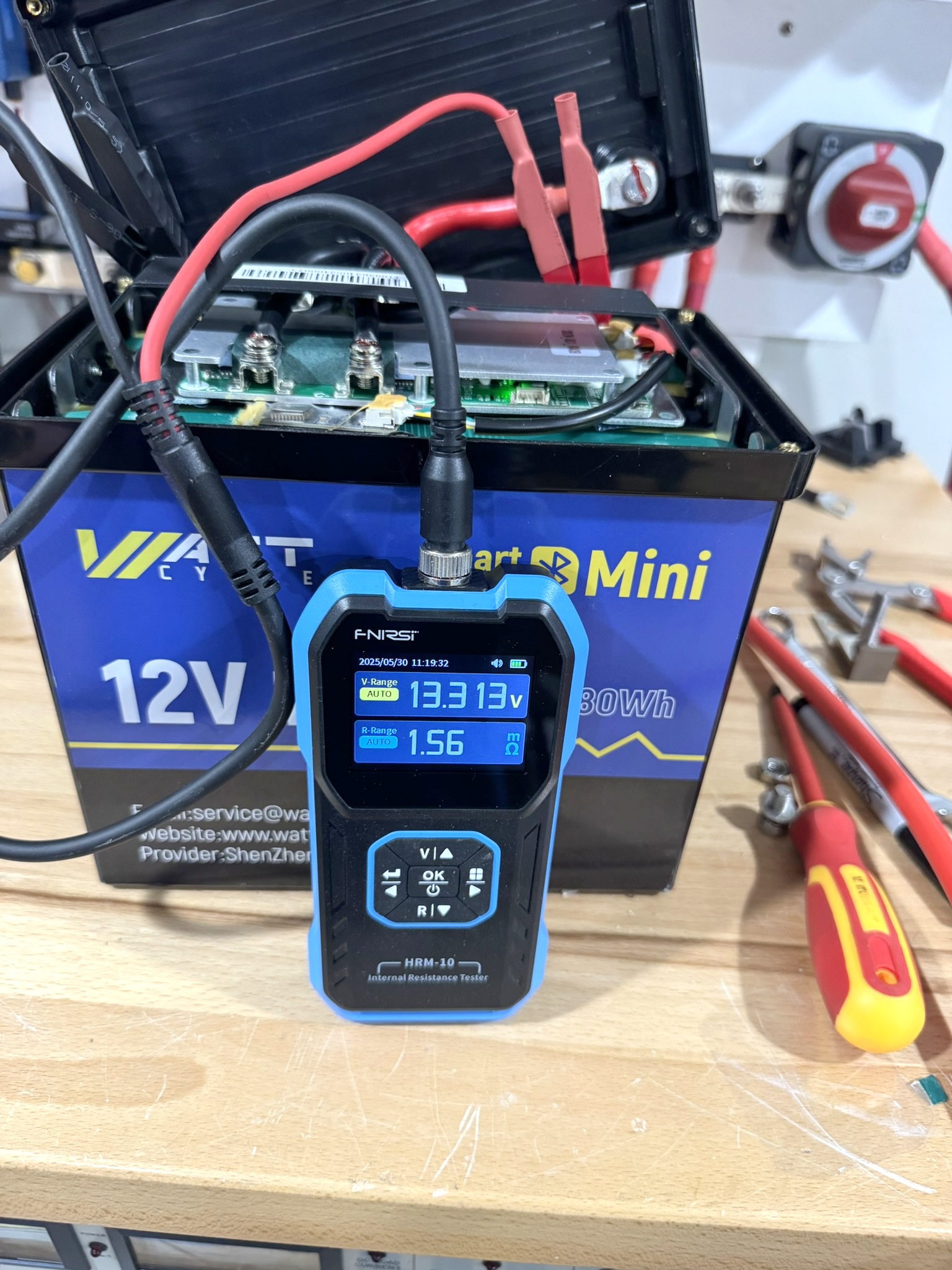
Always measure IR at the actual cells:
Another example of why you want to seek out drop-in batteries with removable lids.
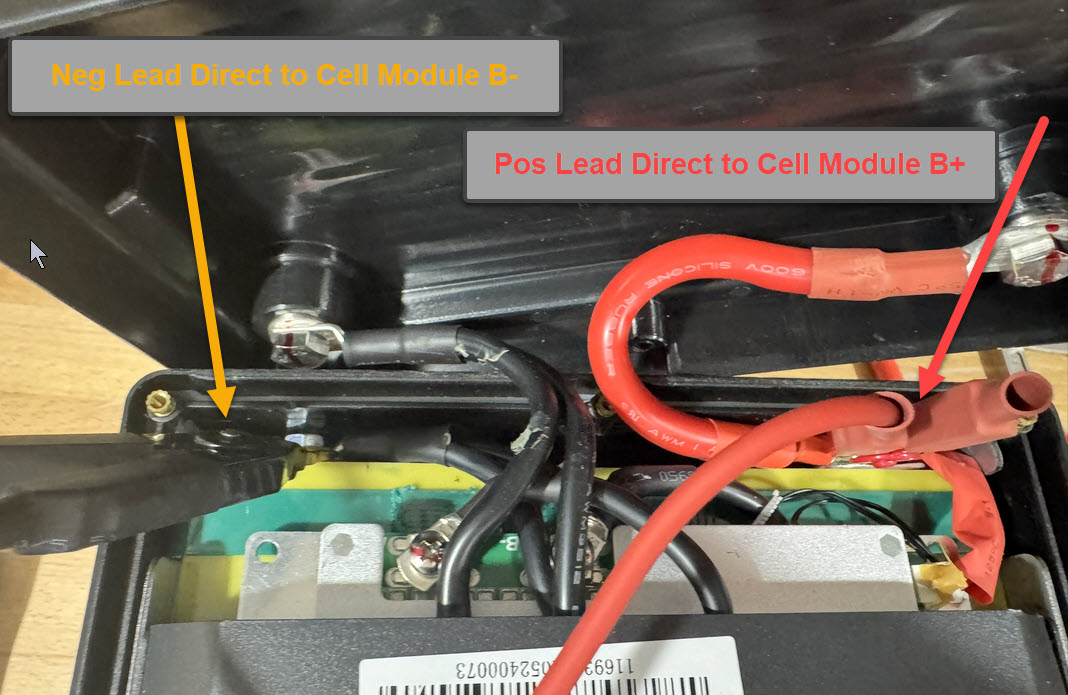
For the purposes of this article I used full-cells, which makes the point. However, for clarity, lower SoC cells can actually have a higher SCC.
The Calculation:
- I = Short circuit current (amps)
- V = Battery voltage
- R = Total internal resistance (ohms)
1.56 mΩ = .00156Ω
The Math is Easy
13.313V ÷ .00156Ω =8,533A SCC
This battery is adequately protected by an MRBF fuse with a 10,00A AIC
This is why AIC interrupt ratings matter and are really the most important factor when choosing a fuse for LFP.
Example 2: Large Prismatic Cells
Let’s look at a a typical 314Ah EV-grade LiFePo4 cell.
Internal resistance:
0.17 mΩ
A 4S battery would have approximately .68mΩ (busbars add a bit too)
0.68 mΩ = 0.00068 Ω
13.3V ÷ .00068 = 19,588A
Yes, a single 314Ah 4S 12V battery can theoretically deliver 19,500A of fault current.
This is exactly why ABYC calls for a 20,000A AIC fuse for Li-Ion batteries over 200Ah
Real-World Current Will Be Lower
Before someone turns into a keyboard warrior:
“My clamp meter never showed 18,000A!”
Of course it didn’t, even the top of the line Fluke’s cap out at 1000A.
The calculation above is a theoretical Ohm’s law calculation.
Real systems have additional resistance from:
- Bus bars
- Cell interconnects
- Battery terminals
- Battery switches
- Fuse holders
- Cable resistance
- Fault resistance
These all reduce fault current the fuse would see.
However, when designing OCPD we only care about worst-case available fault current, not the number we’d like to see.
UL short-circuit testing similarly evaluates battery systems under extremely low resistance fault conditions. It is pretty obvious many of the batts out there claiming UL-1973 don’t actually have it, they’re lying or they paid off their third party testing lab. The only way to pass UL-1973 is a built in fuse or breaker. Epoch has them but many brands claiming UL-1973 do not. There’s a reason Battleborn never got UL-1973. There’s no way it would pass.
Why AIC Ratings Matter
The ABYC Standard

Flooded Batts = 3000A AIC (for every 100Ah of installed capacity)
TPPL AGM & LFP = 5000 AIC (for every 100Ah of installed capacity)
Table 3C:

Available fault current determines whether a fuse or breaker survives the event. When fault current exceeds the interrupt rating of the protective device, bad things happen.
-Contacts can weld-set (breakers)
Fuses can physically explode = (unsafe failure)
Arc Fault Plasma – This defeats the fuses breaking capability and can happen, especially in higher voltage systems
ABYC requires consideration of available fault current when selecting overcurrent protection, and battery banks with high fault current capabilities demand appropriately rated fuses and breakers.
This is why quality Class-T fuses remain the gold standard for large lithium and TPPL battery banks.
There are more than Just Class T fuses that have a 20K AIC but commercially available marine fuse holders don’t yet exist. Eaton/Bussmann just launched an entire line of EV fuses that look very promising but they are not yet readily available. Some appear to fit a Mega-fuse holder. Time will tell.
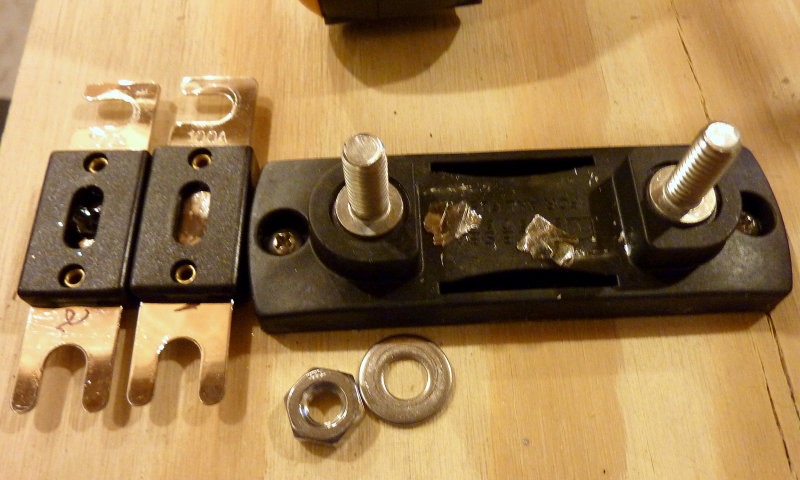
UnSafe Fuse Failures:
In 2014 I was conducting some fuse testing with a large LFP bank, This fuse tripped (black dot) then arc welded back together.
I even tested ANL Fuses which literally exploded the windows. Another type of unsafe failure:
Don’t Try To Beat the System.
Just because you now know how to calculate SCC don’t try to beat the system. Always follow ABYC standards. Why? If there’s a fire on your boat, not even related to the fuse, the insurer now has a fool-proof way to not pay the claim. It will cost you 10X what a proper fuse does, in legal fees, to fight the insurer..I suspect the money is better spent on proper fusing.
Bottom Line
When determining short-circuit current:
- Ignore the BMS current or short-circuit rating.
- Determine the internal resistance of the cells.
- Add cell resistances together or measure cell module B- & B+
- Convert m-Ohm’s to Ohms.
- Apply Ohm’s Law.
- Size fuses and equipment based on ABYC standards
Remember:
A 200A BMS does not magically transform an 19,500A battery into a 200A battery.
The cells don’t care what the marketing brochure says.
Be Safe!
PLEASE HELP!
This site is 100% reader supported. My wife is urging me to shut it down as it just keeps costing us money. My stroke-recovery, PT & OT is very costly & not covered by insurance as is authoring this site and keeping it secure. Click BUY ME A COFFEE if you want to support this site.
